
30 years on: remembering the Sea Empress disaster

Thirty years ago, on 15 February 1996, the Sea Empress ran aground off St Anne’s Head and unleashed one of the worst environmental disasters Wales has ever faced.
More than 72,000 tonnes of crude oil spilled into the sea, coating 120-miles of coastline and leaving a deep mark on the people who responded, the communities affected, and the natural environment we work so hard to protect.
For Natural Resources Wales (NRW) and our predecessor organisations, the memories remain vivid. A small number of staff who were there still work with us today, carrying the lessons, friendships and emotional weight of those extraordinary months.
“There were tables everywhere… and only one phone line.”
Andrea Winterton, then a junior conservation officer, now Marine Services Manager
Andrea was out on site when she first heard the news. By the next morning, she was in the Milford Haven Port Authority meeting room, which was hastily transformed into an incident centre.
“There were tables everywhere, and people everywhere from numerous different organisations. But there was only one phone line and one fax machine. That phone happened to be on the environment table, so I spent half the day answering calls meant for everyone else,” said Andrea.
The clean‑up began immediately, but every tide brought fresh contamination. As the vessel shifted, more oil escaped.
Part of Andrea’s daily role became collating the numbers of dead seabirds washing ashore.
“There were thousands of dead birds. Volunteers and staff were out counting and collecting them. It was incredibly hard on the people doing that work,” she added.
As well as sea birds, other marine wildlife on the shore was smothered, including seaweeds, rockpool life and shellfish such as cockles and mussels.
“I held the sacks of dead seabirds and burst into tears.”
Jamie Bevan, Senior Officer in the Conservation Land Management Team
Jamie was part of the team mapping inter‑tidal habitats and the spread of the oil.
“The first thing that hit me upon arriving in Pembrokeshire was the overwhelming smell of oil in the air,” he said.
For about two months, Jamie walked miles of coastline every day, surveying beaches and coves. Then the oiled seabirds began washing up and recording their deaths became part of his job.
“I’d carry sacks of dead birds along the shore as I collected them up while surveying the shore day after day.
“I remember standing knee deep in oil one day, holding the full sacks, and bursting into tears. You tried to harden yourself to it, but sometimes it still got too much.”
“I’ll never forget the morning the oil hit Tenby.”
Lyn Richards - then Environment Officer, now Landfill Disposal Tax Team Leader
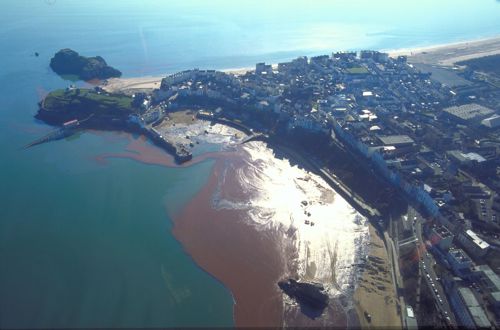
Lyn still remembers stepping onto Tenby’s North Beach as thick crude oil travelled closer to the coastline.
“Residents were standing there in tears. It was horrific; something you never forget,” he said.
He recalls being unexpectedly asked to survey the coastline from the air:
“It was my first time in a helicopter. We flew in and out of every cove along the Pembrokeshire coast, checking where the oil had reached. Seeing it from the air really brought home the scale of the disaster.”
“The camaraderie kept us going.”
Rod Thomas, Senior Officer in the Environment Team
Rod was part of the environmental group based in the incident centre advising on dispersants, waste disposal and sensitive habitats. Young officers suddenly found themselves making crucial decisions on the clean-up operation.
“We were young and enthusiastic, but nothing prepares you for something like that. One minute you’re logging data, the next you’re being asked where a tanker should be moved. Everyone just pulled together, he said.
Within days, the WRVS (now RVS) set up a free burger van outside. When locals began joining the queue, they switched to bringing sandwiches and tea directly into the packed operations room, which sometimes held up to 60 people, including Ministers.
“The camaraderie kept us going. There was always someone cracking a joke or bringing in cakes. After 15 months in that incident room, it came to the last day, and someone from National Trust baked a cake shaped like an oil tanker. You cling to those moments.”
“I didn’t even know where to go to get the boat to Skomer Island!”
Paul Culyer, Senior Officer, Conservation Land Management
Paul had only just moved to Pembrokeshire when the spill happened. He recalls:
“I was up early with my baby son when I heard the news, and I didn’t even know where the boat launch for Skomer Island was. I know the area very well now!”
In at the deep end, Paul spent months mobilising equipment, gathering oiled birds, and working from small ribs fitted with inflatable booms to scoop oil and tow it to a Dutch vessel for removal. Work was dictated by tides, weather and even the live‑firing schedule at Castlemartin.
“It was demanding work with surreal moments of dark humour, but it forged relationships that have lasted more than thirty years,” said Paul.
“Caldey Island nearly killed me.”
Alan Waters, Integrated Workforce Supervisor
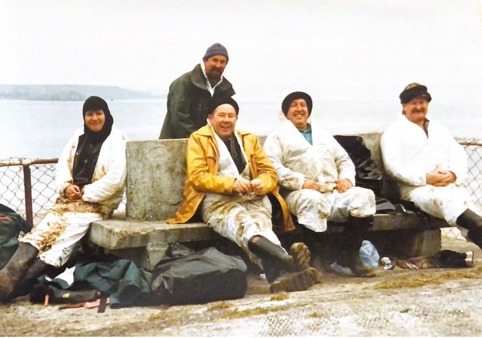
Alan spent nine weeks on the recovery operation and remembers a punishing weekend on Caldey Island.
Alan and colleagues were filling sandbags with contaminated sand and oil, then carrying them across soft dunes to a boat to be taken away for safe disposal.
Alan said:
“The camaraderie was the best part. We had competitions about who could carry the most sandbags to the boat. Two days of that nearly killed me. You needed that bit of fun and humour to get through it.”
A monumental clean‑up and investigation
Thousands of people were involved in the clean-up operation. Farmers arrived with tractors and slurry tankers. Rock climbers were lowered down cliffs to reach inaccessible coves. Some beaches were cleaned pebble by pebble. Against all odds, the main tourist beaches reopened before Easter.
A later investigation led to a major prosecution. The Milford Haven Port Authority was fined £4 million - the largest pollution‑related fine ever issued in the UK at the time. The court found that negligent navigation by the port’s pilot had caused the Sea Empress to run aground.
Nature’s remarkable recovery
A decade after the disaster, long‑term monitoring showed surprisingly little lasting impact on the coastline and wildlife of southwest Wales.
Andrea reflects:
“Nature had recovered remarkably well. To me, it said two things: the clean-up was effective, and nature can recover extraordinarily well when given time and space.”
Seabird populations rebounded, marine mammals showed no long‑term decline, and most habitats returned to normal within a few years.
Today, the coastline remains one of the most beautiful and ecologically rich in the UK - a reminder of both the fragility and resilience of the natural world.
The Sea Empress legacy
Thirty years on, we honour the efforts and resilience of our staff and all those involved in this massive recovery operation.
The Sea Empress changed how the UK prepares for and responds to maritime incidents. The Donaldson Review, carried out afterwards, led to major reforms in coordination, communication and decision‑making during maritime emergencies.
These structures ensure that if a major incident happens again, Wales and the wider UK are ready.
PIC CAPTIONS
Pic 1: A boat team covered in oil just back from booming oil from the coves of Pembrokeshire. L-R Doug Oliver, Ifan Jones, William Sandison, Rhodri Evans, Mike Alexander, Richard Preece and Tom Hellawell. Ian Tillotson was also a key member of this team but not in this photo.
Pic 2: Aerial shot of the Pembrokeshire coast engulfed with oil. (Credit Paul Kay photography)
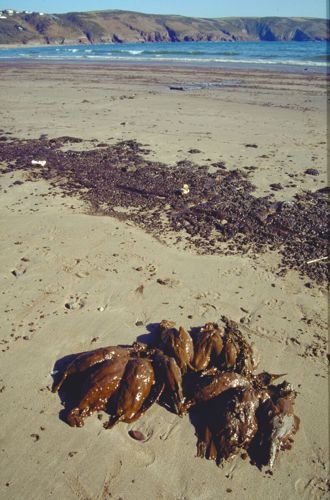
Pic 3: Dead oiled seabirds washed to shore with every tide. (Credit Paul Kay photography)
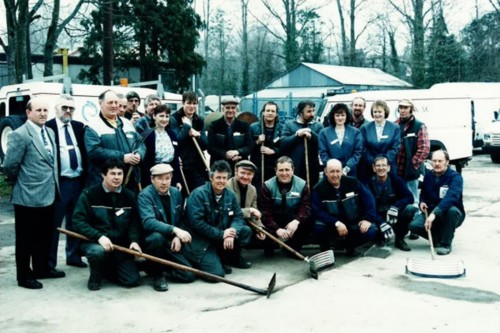
Pic 4: Team photo from one of our predecessor organisations, the National Rivers Authority (NRA), armed with shovels and rakes for removing oil from the beaches.
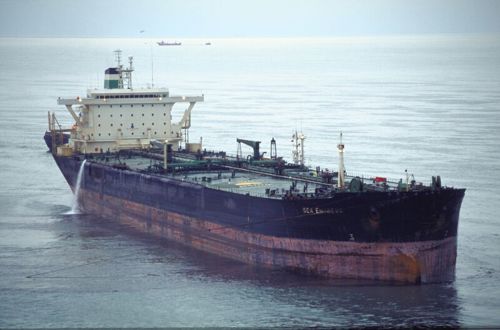
Pic 5: The Sea Empress (Credit Paul Kay photography)
Pic 6: Some members of the team that cleared oiled sand from Caldey Island