
A busy spring on the Upper Wye: restoring rivers from the ground up

As lambs appear in fields and rivers run high, spring on the Upper Wye is one of the busiest periods for delivering practical restoration work across the catchment.
Over the past few months, members of the Upper Wye Catchment Restoration Project team have been working closely with farmers and landowners to put measures in place that help both farms and rivers cope with the warmer, drier months ahead and build resilience in the longer term.
Across the catchment, a wide range of work has been delivered — from riverbank tree planting and fencing, to habitat creation and ‘slow the flow’ measures. While each site is different, the aim is the same: to restore important river habitat, improve water quality and create conditions for both wildlife and farming to thrive.
On one farm, newly fenced buffer zones now protect the riverbanks from livestock access. These areas will allow vegetation to recover, help to stabilise the banks and reduce erosion. Over 2,000 young native trees have been planted, which will provide shade, strengthen banks and create valuable habitat as they establish.
Elsewhere, work has focused on slowing the movement of water through the landscape. Leaky woody dams have been installed in smaller watercourses to hold back flows during heavy rainfall, helping to reduce overland flow across fields and trapping sediment. These nature-based solutions are simple but effective and work with the landscape.
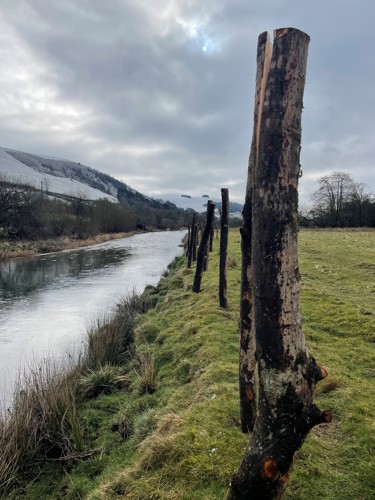
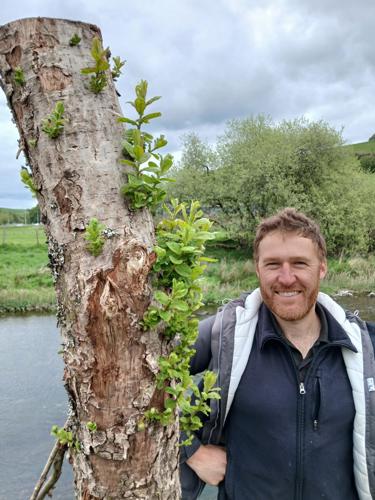
Innovative techniques are also being used to tackle more challenging areas. In places where fencing isn’t practical, riverbanks have been reinforced using live willow stakes — driven into the ground where they will take root and sprout, providing long-term stability and habitat.
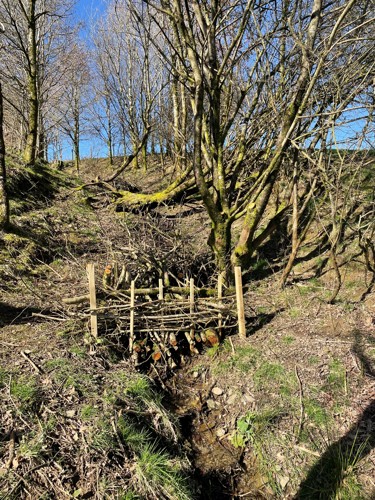
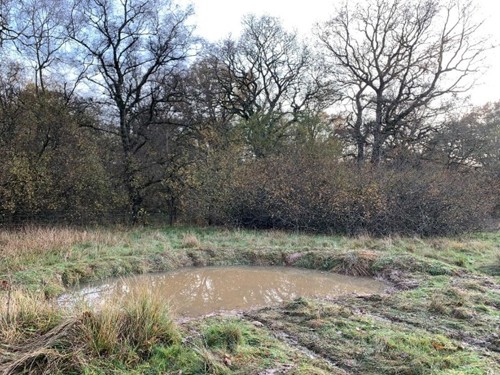
Further across the catchment, a series of “slow the flow” interventions have been delivered, including the creation of small wetlands, ponds and swales. On Welsh Government Woodland Estate we have delivered another project where old drainage ditches have been ‘stuffed’ with woody material and trees pleached into the river channel to hold back high flows. Together, these measures help keep water in the landscape for longer — helping to reduce peak flows in winter and maintaining flows during drier periods.
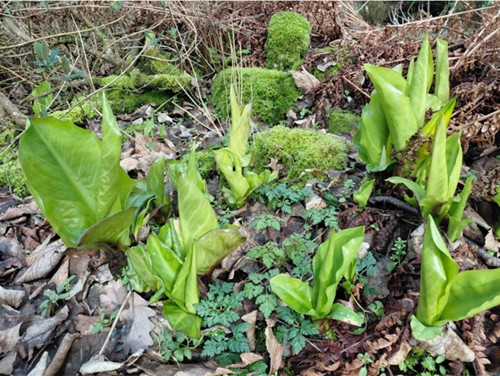
This spring has also marked the start of another busy season for tackling invasive non-native species. Plants such as Himalayan balsam, Japanese knotweed and American skunk cabbage are beginning to emerge, and targeted control work is already underway to prevent their spread and protect sensitive habitats.
What links all of this work is partnership. By working directly with farmers and land managers, solutions can be tailored to each site — delivering practical benefits for farm businesses while improving the health of the river.
Taken together, these individual actions add up to something much bigger. Stretch by stretch, farm by farm, they are helping to reconnect rivers with their floodplains, improve habitat for wildlife and build a catchment that is better able to cope with the pressures of a changing climate.
It’s been a busy spring — but it’s also been a productive one. And as the season continues, this work will keep growing, delivering lasting benefits for the Upper Wye.
To keep up to date with our work you can follow us on as Facebook, X (formerly Twitter) and Instagram, or view our project newsletters here.
If you’d like to find out more about the project, email us at adfergwyuchaf@cyfoethnaturiol.cymru