
SoNaRR 2025 Bridges to the future

Visit Wales
This information is part of the State of Natural Resources Report 2025 (SoNaRR).
Foreword – Chair of Natural Resources Wales
For too long, we have behaved as if environmental decline were someone else’s problem - something to be managed by regulators, deferred to future governments, or debated until it becomes unavoidable.
That time has passed.
The evidence is no longer abstract, technical or distant. It is visible on our doorsteps: flooded homes, polluted rivers, failing soils, collapsing wildlife, unaffordable energy bills, rising food costs, and communities living with growing risk and uncertainty. These are not warnings of what might happen. They are the consequences of what has already happened.
The State of Natural Resources Report 2025 (SoNaRR) sets this out plainly. Despite pockets of progress, Wales remains on a trajectory that continues to degrade nature and undermine resilience. The systems that underpin everyday life are still extracting more than the natural world can replenish. If this continues, the damage will accelerate – and the costs will fall hardest on those least able to bear them.
Let us be clear: incremental change will not save us.
We cannot regulate our way out of this. We cannot recycle our way out of this. We cannot rely on efficiency gains while the underlying systems continue to drive demand, pollution and inequality.
And no single government, organisation, sector or policy can fix this alone.
This is a whole-society challenge. It demands collective ownership – across public bodies, businesses, communities and citizens. Those who argue otherwise need only look at what has happened over the last decade in their own neighbourhoods, fields and rivers. The suffering is already visible, often literally at the back door.
SoNaRR shows that the most damaging pressures on nature are not confined to environmental policy. They are embedded in how we heat our homes, how we travel, how we grow and consume food, how we use land, and how we invest in places. Treating environmental harm as a downstream issue - something to clean up after the fact - is no longer credible.
If Wales is to remain a place where people and nature can thrive, we must change the systems themselves, not simply manage their impacts.
That is why Bridges to the Future matters. The Five Bridges are not optional extras or long-term aspirations. They are a practical framework for urgent action - aligning policy, investment, regulation and partnership to reduce pressure at source and rebuild resilience at scale.
At Natural Resources Wales, we are under no illusion about the limits of our role. We cannot deliver this transition on our own - and nor should we try. Our responsibility is to convene, to challenge, to focus action where it makes the greatest difference, and to accelerate learning by doing. Leadership now means building bridges between sectors, places and interests that have been separated for too long.
Wales has strong foundations: world-leading legislation, clear evidence, and growing public awareness. But laws do not deliver change on their own. Delivery depends on choices, about investment, land use, infrastructure, consumption and fairness made consistently and courageously over time.
SoNaRR tells us where the pressures are most acute and where delay will cost the most. What remains undecided is whether we are willing to act at the pace this moment demands, to confront difficult trade-offs, and to share responsibility honestly.
Our corporate plan gives us the mandate to challenge entrenched practice, to stop doing what no longer works, and to innovate in the public interest. That is not comfortable work, but it is essential.
This is not a warning for the future. It is a reckoning for the present.
If we act now, with urgency and shared ownership, Wales can still lead-not just in ambition, but in delivery. If we do not, the next SoNaRR will simply document deeper loss, higher costs and narrower choices.
I look forward to crossing these bridges together - not in hope alone, but with resolve, so that future generations inherit a Wales that is resilient, fair and alive with nature.
Neil Sachdev
Chair of Natural Resources Wales
Foreword, Future Generations Commissioner for Wales
I see a Wales where, instead of nature warnings, we are celebrating progress; where we are so close to meeting the goals of the Well-being of Future Generations Act that everyone can feel the difference. We CAN make good on the promises we made to our future grandchildren when we enacted our world-leading legislation.
But that future will not happen by accident, and the Wales 2025 State of Natural Resources Report gives us a reality check on our ambition to leave the world in a better state than we found it. The data offers a vital well-being status check: what is not working, and what we must do to secure a better prognosis.
Like my Future Generations Report, launched in April 2025, SoNaRR is designed to support politicians and public body leaders to make life better for people and our planet, now and in the future. That aim should matter to every political party as Wales heads to the Senedd polls this May.
The whole of the nation will be judged, with increasing scrutiny, every passing day, on the promise we made back in 2015: to work together towards a shared vision of a healthier, more prosperous and more equal Wales, with a vibrant culture and thriving Welsh language, supported by resilient ecosystems that sustain our way of life.
The Well-being of Future Generations Act gives us a way to respond to the problems made plain in this report. We are not managing natural resources sustainably. We are using them faster than they can recover. The consequences are already hitting hard: floods in our towns, heat-related illness, polluted rivers, declining birdsong and rising food prices. These are not isolated environmental problems. They expose system failures that harm our economy, infrastructure and public services.
These pressures are felt most by the people already facing the greatest challenges, widening inequalities and storing up higher costs for the future. When nature is degraded, quality of life falls, and nature’s ability to absorb our impacts and provide what we need is weakened.
But a better future is within reach, it is one we must build together.
SoNaRR is essential reading for NRW itself, but also for economists, financial planners, land managers, health professionals, Ministers and decision-makers. The strongest levers for change sit in the decisions we make across public policy, investment and delivery, not only within the environmental sector.
These systems shape emissions, resource use and environmental pressures, but they also shape health, affordability and equity. If redesigned well, with the momentum our future deserves, they can meet Wales’ needs so our people can thrive.
Wales has taken globally recognised steps through the Well-being of Future Generations Act and the Environment (Wales) Act. Their value lies in delivery: consistent decisions, budgets and incentives aligned to outcomes. They require public bodies to collaborate, act preventatively, and work for the long term, providing a shared framework for change across Wales.
We cannot continue to ignore the proven links between nature, human health and economic stability. Restoring nature is a literal life-and-death issue, and everyone has a role in it.
This briefing offers practical guidance for policy and place makers to accelerate delivery now, by acting urgently on the systems that shape daily life, and by building the conditions for change that lasts.
Derek Walker
Future Generations Commissioner for Wales
Making everyday life work - for people and for nature
Imagine a Wales where every home is warm and affordable to heat, where healthy food is easy to find and within everyone’s means, and where getting around does not mean sitting in traffic or breathing polluted air.
For many people across Wales, this vision is a long way from reality.
Right now, too many families live in cold homes that cost too much to heat. Others struggle to afford nutritious food, while the global food system adds pressure on land and water and contributes to pollution and poor health. When it comes to transport, our reliance on cars leaves us locked into congested, polluting journeys, while carless households are left isolated.
Changing the way these systems work can change the story - for people and for nature. Imagine lower bills, healthier communities, stronger resilience, and fairer access to life’s essentials, all while easing the pressure on our natural world.
SoNaRR 2025 explains the challenges in front of us that prevent us from achieving this change, and what that means for our well-being.
The Five Bridges to the Future offer a glimpse of what might be possible in the future.
They show how we can dramatically ease the pressure on our environment while improving quality of life and building long-term prosperity for our communities - a Wales where the way we live works better for us and for nature.
To achieve real sustainability, we need to think beyond quick fixes. This is about redesigning the systems that shape our lives, so they meet our needs without damaging the delicate web of life we all depend on.
Why redesigning systems matters now
Wales has achieved a lot in recent years. We have brought peatlands back to life, cleaned up old metal mines, strengthened the rules that keep our air clean, and become one of the world’s leaders in recycling. These successes show what is possible when we focus and work together.
But SoNaRR 2025 gives us a reality check: these wins, as important as they are, are yet to add up to true sustainability. Our consumption footprint is still far beyond safe limits. Nature is under pressure, and the resilience of our ecosystems continues to decline.
The challenge is not to be found in any single place – it is woven through the way our systems work. For decades, environmental action has been focused in silos, tackling energy issues here and transport problems there. But the pressures we face do not fit into neat boxes. They cut across everything: the food we eat, the homes we live in, the land we use, and what we consume.
Take river pollution. Rules and enforcement matter, but the problem does not start or end at the riverbank. It is shaped by farming practices, food supply chains, housing growth, and decades of investment decisions. Tightening discharge permits without improving land management can simply push the problem upstream. Focusing only on compliance misses the bigger picture - the markets, procurement choices, and behaviours that drive outcomes.
A systems approach gives us that bigger picture. Improving river health means aligning land-use policy, farming support, food procurement, wastewater investment, and catchment planning around shared goals.9 It means making clear choices and managing trade-offs, supported by integrated, place-based strategies.
The need for change is clear:
Global resource use has tripled in the last 50 years and is set to rise by another 60% by 2060.
Resource use drives around half of global greenhouse gas emissions and most biodiversity loss.
Wales’ overseas environmental footprint may have stabilised in some areas, but these gains are fragile. Efficiency helps, but SoNaRR shows it will not deliver the scale of change we need if the systems themselves keep generating new pressures.
The conclusion? Small tweaks are not enough. To secure well-being within environmental limits, we need to redesign the systems that shape our lives.
Wales has the tools to lead
Wales is not starting from scratch. We already have strong foundations in place. The Well-being of Future Generations Act and the Environment (Wales) Act set out a clear vision: decisions should look to the long term, prevent problems before they happen, and bring people together - government, communities, and citizens - to shape a better future.
Our challenge is not a lack of laws or powers – the challenge is how we use them.
SoNaRR provides the big-picture evidence we need to understand how our systems work and where they need to change. It informs the Natural Resources Policy which weaves environmental well-being into every part of government, and connects sector-based approaches into broader strategies that tackle complex problems. At a local level, Area Statements, linked to Public Services Boards, give us a flexible, place-based platform to test new ideas and learn what works.
Where pressure meets opportunity
Every day, we rely on systems that shape how we live - what we eat, how we power our homes, how we travel, and the places we build. 1 These systems, known as our well-being systems, make life possible. But they also create most of the pressure on nature: with our land and sea use generating emissions, pollution and waste.
However, these systems are not only the source of the problem – they are also the key to the solution. If we redesign them, we can cut pressure at source while making life fairer, healthier, and more affordable for all.
Traditional approaches often focus on the hard, physical parts of these systems – our roads, power stations, housing developments. These matter, but once they have been built, they are slow and costly to change. The real power lies in the softer system elements - the rules and incentives that guide behaviour, the prices and subsidies that shape choices, the access arrangements that decide who benefits, and the social norms that influence what we determine as “a good life”.
These softer elements can change faster - through policy, regulation, procurement, and leadership. By shifting them, we can reduce demand and pressure at the source, improve fairness, and unlock better outcomes from the infrastructure we already have, while planning for longer-term changes.
As the UN simply puts it: “Incremental improvements within existing systems will not be sufficient to achieve sustainability.”
A systems approach, combined with leadership that connects these softer system components across the food, energy, mobility, and the built environment systems, gives Wales the leverage to tackle our big, interconnected challenges at the right scale.
The Five Bridges to the Future framework provides the levers for change we need, and a launchpad for bold, connected leadership. They offer practical ways to turn evidence into action, close the gap between policy and everyday life, align national priorities with local delivery, and invites every sector to the table to play their part.
A fo ben, bid bont – to be a leader, be a bridge
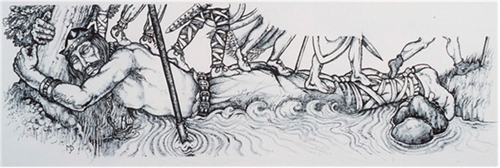
In Welsh tradition, Bendigeidfran lays himself down as a bridge so others can cross. It is a powerful image - and one that still speaks to our times.
Modern leadership is about more than giving orders; it is about creating pathways where none exist, standing firm in uncertainty, and helping everyone move forward together.
It is this notion that underpins the Five Bridges to the Future.
Taken together they form a learning system, guiding action, testing ideas in practice, and using evidence and experience to adapt and improve. Each ‘Bridge’ encourages policy makers and place makers to think holistically and design solutions that support multiple well-being goals.
The Five Bridges to the Future
How can the Five Bridges help decision-makers deliver at scale?
The most powerful levers for change are not always the ones that are most visible. Beyond the obvious infrastructure and technology, it is the softer elements – the rules, incentives, standards, and social norms that quietly shape how everyday needs are met.
Evidence shows that well-being does not have to come at the cost of the planet. Some countries achieve similar quality of life using a fifth of the resources. This proves that environmental pressures are not fixed, they are shaped by choices in system design.
By rethinking how we plan, regulate, and invest, we can create well-being systems that deliver the same outcomes with far less demand on nature.
The Five Bridges provide the framework to make this shift, helping us design a future where thriving communities and healthy ecosystems go hand in hand.
Bridge 1 – Redesigning everyday systems
Bridge 1 is where the journey begins: reducing demand in the systems we use every day.
The most powerful changes often start with simple questions - how do we design our towns, our homes, our transport, and food systems so they work better for people and nature?
Compact, well-connected places cut car dependency and energy use. Large-scale retrofit reduces fuel poverty and emissions. Sustainable food systems restore soils and reduce pollution.
Progress depends on aligning planning, investment, and regulation around shared outcomes, and making everyday choices easier for everyone.
Foundations to build on:
Optimised Retrofit Programme: delivering warm, low-carbon homes while supporting local supply chains.
Active Travel Act: making walking and cycling the default for short journeys, improving health and air quality.
Bridge 2 – Restoring nature as infrastructure
Cutting pressure at source is vital, but it is not enough. We also need to rebuild the ecosystems that underpin our resilience and well-being.
Bridge 2 treats nature as essential infrastructure. That means planning, funding, and managing it with the same long-term intent as roads or energy systems, prioritising prevention, coordinating across sectors, and supporting stewardship through incentives and partnerships.
Restoring ecosystems strengthens water security, soil health, biodiversity, and climate resilience. Resilient Ecological Networks reconnect habitats, so they work as systems, not isolated sites, embedding nature recovery into planning, agriculture, flood risk management, and investment. Evidence shows this approach reduces future costs and delivers multiple public benefits, making it one of the most cost-effective investments we can make.
Foundations to build on:
Resilient Ecological Networks: moving beyond isolated sites to system-scale design for biodiversity, flood, and climate benefits.
National Forest for Wales: creating connected woodlands that support biodiversity, climate resilience, and community well-being.
Bridge 3 – Building a regenerative economy
To reduce environmental pressure, we need more than efficiency - we need an economy that restores as it grows. Today, Wales’ economy relies heavily on high material use, leaving us vulnerable to rising costs and supply chain shocks.
A regenerative economy flips this model. It treats natural assets, materials, and skills as resources to be maintained, reused, and regenerated. Public procurement, investment, and market rules are powerful levers - because what we build, buy, and invest in today shapes demand for decades.
Circular design, repair, reuse, and low-carbon materials like timber can dramatically cut material footprints while keeping value in local communities. Aligning skills and supply chains with these priorities ensures the transition delivers both environmental and economic benefits.
Foundations to build on:
Home-grown Homes: using Welsh timber and local supply chains to create low-carbon homes and store carbon in the built environment.
Amsterdam Circular Procurement Programme: embedding circular principles into major purchasing decisions, reducing waste and stimulating local markets.
Bridge 4 – Realigning governance for the long term
Lasting change is not just about what we build or restore – it is about how decisions are made and sustained over time. When governance is fragmented, budgets are short-term, and policies siloed, even well-intentioned actions can work against each other.
Bridge 4 focuses on aligning rules, incentives, and decision-making across systems. It means connecting national priorities with local delivery, managing trade-offs transparently, and embedding long-term thinking into everyday processes. Without alignment, well-intentioned actions can collide; for example, renewable energy development can compromise peatland restoration, despite both pursuing climate goals.
Wales already has a strong statutory framework for long-term thinking. The challenge is applying it consistently across policy, planning, and investment. Using learning cycles like SoNaRR, Natural Resources Policy and Area Statements can help align priorities and prevent decisions in one sector from undermining another.
Foundations to build on:
Public Services Boards, supported by Area Statements: aligning environment, health, housing, and economic priorities through shared platforms.
Environment Bill: embedding environmental principles into policymaking and strengthening governance for nature recovery.
Bridge 5 – Delivering a fair transition
System change is not just about what we build or restore – it is about who benefits, who participates, and who bears the costs. When fairness is overlooked, sustainability transitions stall, provoke resistance, or deepen inequality. In this sense, fairness acts as social infrastructure - the trust, capability, and shared ownership that makes change last.
Environmental risks are not evenly spread. Some communities face more exposure to pollution, flooding, and poor housing while having less influence over decisions. A fair transition means deliberate investment in participation, skills, and local capability so people are active partners in change.
Predictability and co-design are especially critical in rural areas, where livelihoods and cultural identity are closely tied to land. Embedding justice into policy, ensuring access to benefits like warm homes, clean air, and good jobs, and enabling community ownership builds trust and reduces conflict. When participation and shared value are built in from the start, transitions become more durable, legitimate, and effective.
Foundations to build on:
Future Generations Leadership Academy: building leadership skills for long-term thinking and collaboration across sectors.
Community-led initiatives like Awel Aman Tawe and GwyrddNi: showing how local ownership of energy, food, and climate action strengthens trust and resilience while keeping value in communities.
Crossing the Bridges together
Wales cannot achieve its well-being goals through isolated projects or short-term fixes. The pressures on nature and society come from the systems that shape our daily lives - and from the choices, rules, and investments that govern them.
The Five Bridges offer more than a framework; they are a route to transformation. Together, they show how we can cut pressures at source, restore nature as vital infrastructure, regenerate the economy, realign governance for the long term, and ensure change is fair and inclusive. They are designed as a learning system - helping Wales test ideas, share lessons, and scale up what works.
Now is the moment to turn ambition into reality. That means aligning strategies, budgets, and delivery around shared goals, making trade-offs transparent, and acting boldly at every scale - from local communities to national supply chains.
Wales helped shape the first industrial revolution. Today, we can help lead the next: a revolution of renewal - a model of prosperity where thriving communities and healthy ecosystems go hand in hand. The Bridges show the way forward.
This is Wales’ moment to lead. Not by building walls, but by building bridges towards a future where nature and people flourish side by side.
Authors: Russell Elliott & Fen Turner
Recommended citation:
Natural Resources Wales, State of Natural Resources Report (SoNaRR 2025), December 2025, NRW, Cardiff